


Competition Entries in Numbers
The application period for the 17th Henryk Wieniawski International Violin Competition ended on 9 January. We received 252 applications from 36 countries across 4 continents. The largest number of entries came from China, Japan, Poland, South Korea, and the United States.
Among the candidates, 60% were women and 40% were men. The oldest candidate was born in 1996, and the youngest in 2008. A total of 236 violinists met the requirements of the regulations.
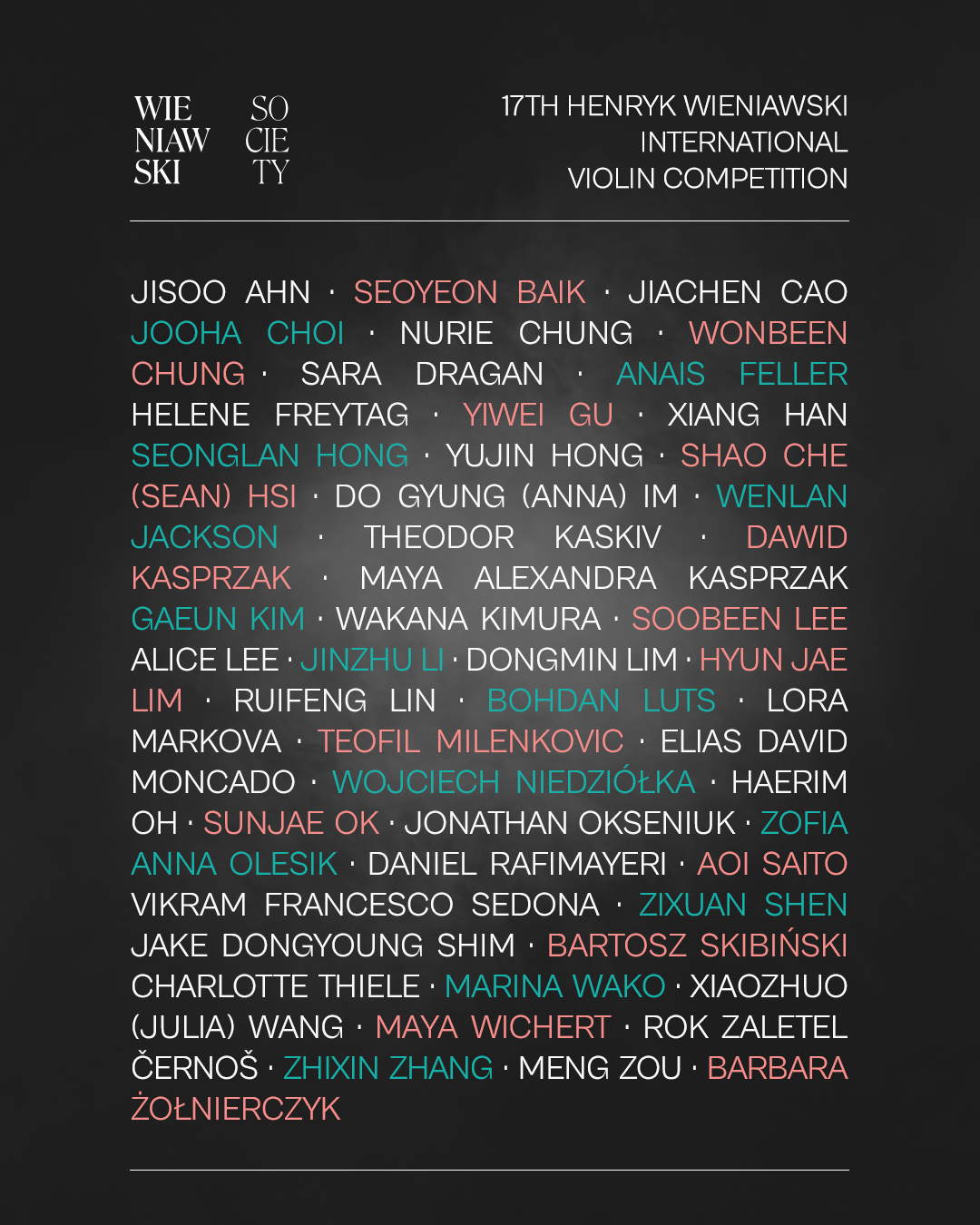

_________________________________
Candidates qualified for the Competition through a two-stage pre-selection process:
Results of the First Pre-Selection Stage
Results of the Second Pre-Selection Stage
_________________________________
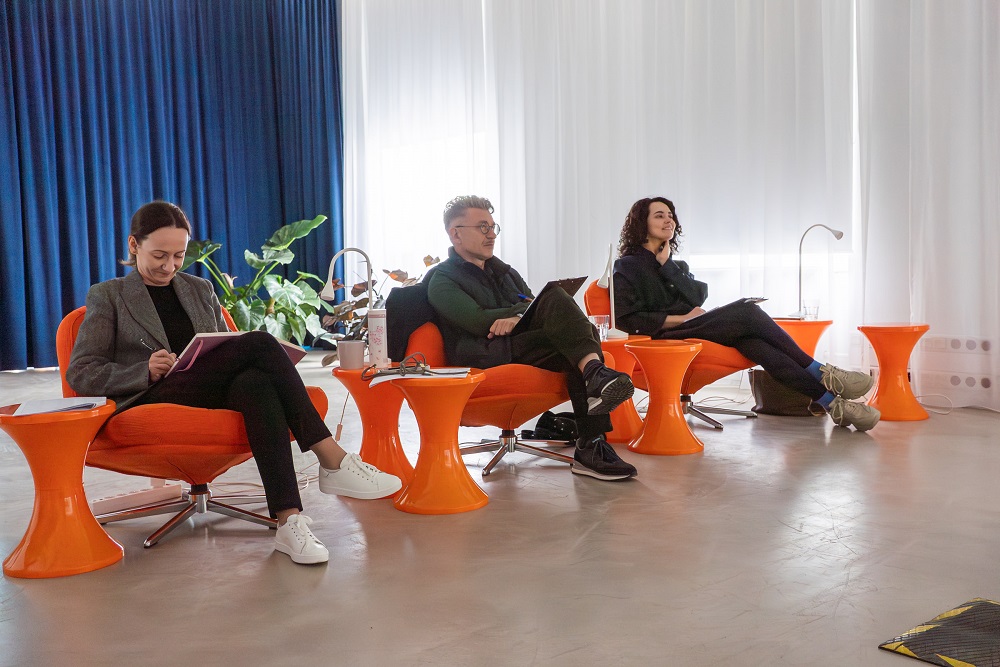
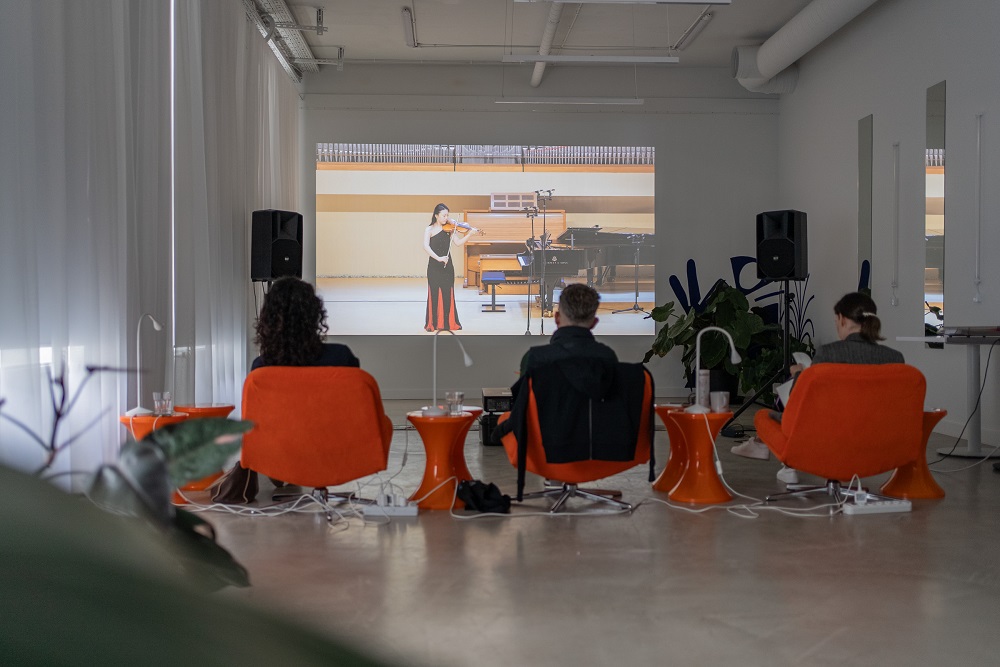
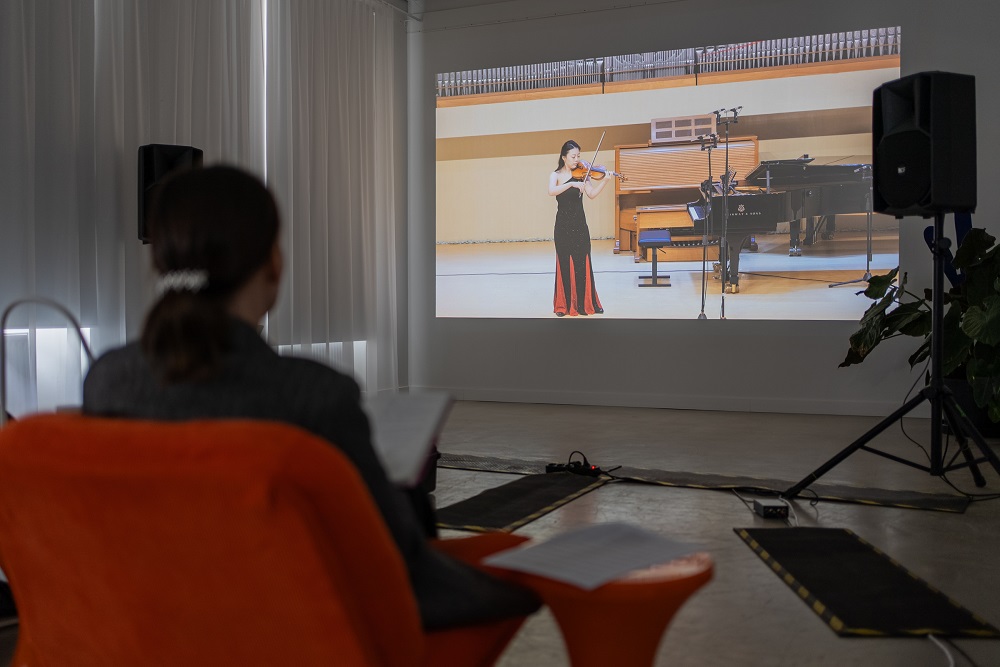
Qualification for the Competition took the form of a two-stage pre-selection process. In the first stage, the Jury evaluated video recordings submitted by the candidates. The recordings had to include three compositions of the candidate’s choice, representing three different musical periods, performed solo or with piano. The total duration had to be no shorter than 15 and no longer than 30 minutes. The recordings could not have been made earlier than 1 December 2024. The audio could not be edited. The performer had to be fully visible at all times. Video editing consisting of several takes was permitted. Each piece could be recorded separately, at different times and locations. Submission of a single movement from a larger cyclic work was also allowed. Except for sonatas and contemporary pieces, all compositions were to be performed from memory. Candidates who received the highest scores from the Jury in the first pre-selection stage were invited to the second stage.
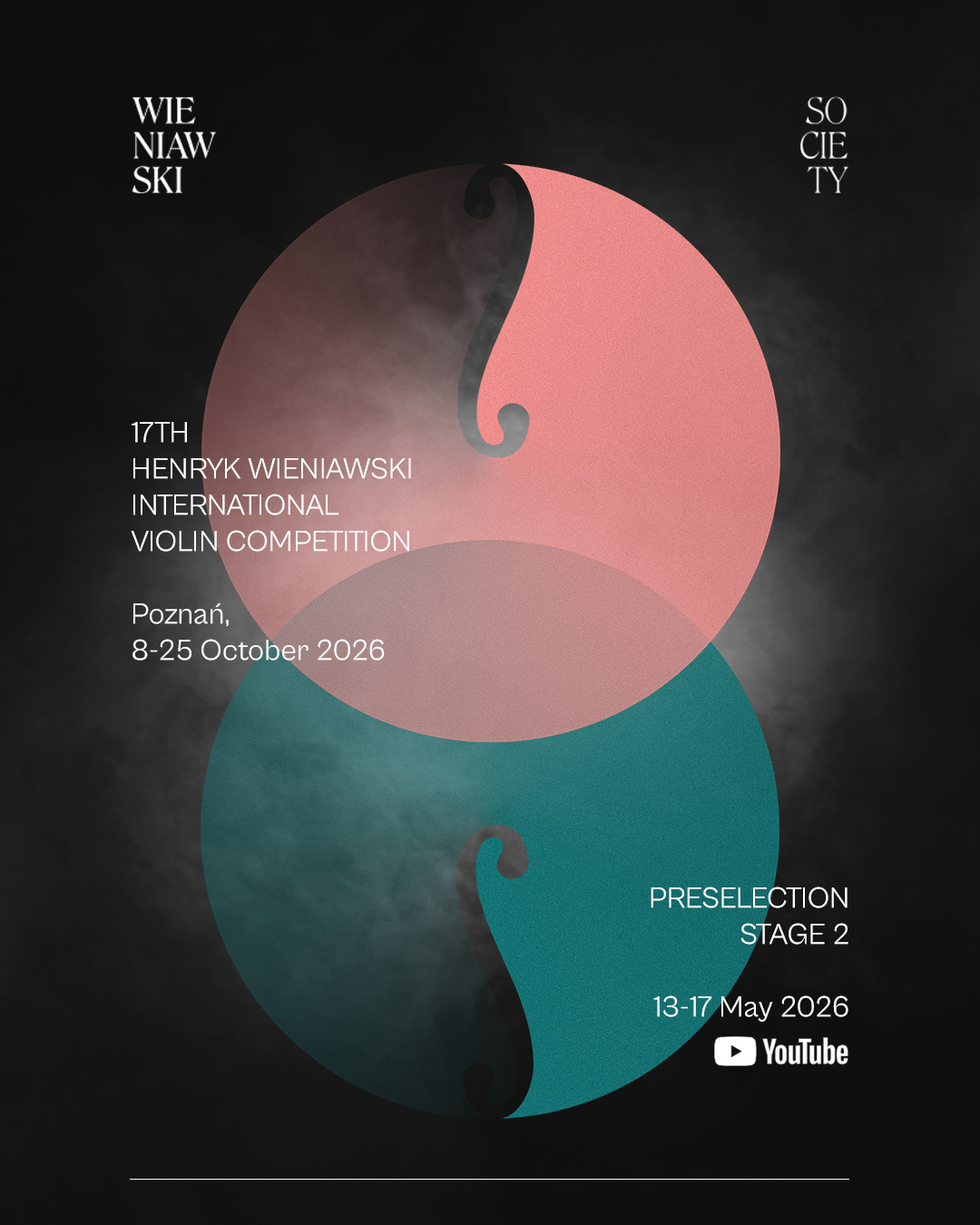
Due to the geopolitical situation (the war in the Middle East), the second pre-selection stage — originally planned as live auditions — was also held based on submitted recordings. The programme was as follows:
- N. Paganini: one caprice of choice.
- J. S. Bach: one of the following sets of sonatas and partitas for solo violin (performed without repetitions):
a. Adagio and Presto from Sonata in G Minor, BWV 1001
b. Siciliana and Presto from Sonata in G Minor, BWV 1001,
c. Allemanda, Double, Corrente, Double from Partita in B Minor, BWV 1002,
d. Sarabanda, Double, Tempo di Borea, Double from Partita in B Minor, BWV 1002,
e. Grave and Allegro from Sonata in A Minor, BWV 1003,
f. Andante and Allegro from Sonata in A Minor, BWV 1003,
g. Allemanda and Corrente from Partita in D Minor, BWV 1004,
h. Sarabanda and Gigue from Partita in D Minor, BWV 1004,
i. Adagio and Allegro assai from Sonata in C Major, BWV 1005,
j. Largo and Allegro assai from Sonata in C Major, BWV 1005,
k. Preludio and Loure from Partita in E Major, BWV 1006,
l. Loure and Gavotte en Rondeau from Partita in E Major, BWV 1006,
m. Menuett I, Menuett II, Bourrée, Gigue from Partita in E Major, BWV 1006.
3. One of the following compositions or groups of compositions by H. Wieniawski:
a. Polonaise de Concert in D Major, Op. 4,
b. Capriccio-Valse, Op. 7,
c. Romance sans paroles et Rondo élégant, Op. 9,
d. Two mazurkas from Op. 12 and two from Op. 19 (a total of four pieces),
e. Variations on an Original Theme, Op. 15 [Theme original varié, Op. 15],
f. Scherzo-Tarantelle, Op. 16,
g. Légende, Op. 17 and Souvenir de Posen, Op. 3,
h. Fantasia on Themes from Faust, Op.20 [Fantaisie brillante sur de motifs de l’opera Faust de Gounod, Op. 20],
i. Polonaise in A Major, Op. 21 [2me Polonaise brillante Op. 21],
j. Oriental Fantasy, Op. 24 [Fantaisie Orientale, Op. 24].
_________________________________
The Application Form, together with the full Rules and Regulations of the Competition and the Rules and Regulations of the Pre-Selection Process, were published in autumn 2025. The pre-selection processing fee was 100 Euro. Candidates admitted to the Competition were required to pay an additional processing fee of 100 Euro. The deadline for submitting applications and recordings was 9 January 2026 at 23:59 CET. The results of the first pre-selection stage were announced on 13 February 2026. The list of violinists qualified for the Competition was published before 1 June 2026.


